A Warm Welcome to Dr Fiona Beer
A Warm Welcome
Before the story is tidy: Dr Fiona Beer on rural medicine, workplace injuries and wallabies
Published 29 September, 2026
We are pleased to welcome Dr Fiona Beer to the Red Health Referral Network.
Some doctors are easiest to understand through their title. Dr Fiona Beer is easier to understand through the situations she is drawn to: rural emergency departments, workplace injuries, remote communities, complex presentations, and the early moments before a medical story becomes clear.
Medico-legal referrals are rarely for a clean diagnosis in isolation. They seek clarity about what happened, how someone presented, what context shaped their recovery and what their function looks like in the real world.
Dr Beer brings a broad, practical and unusually varied background to her work with Red Health. She is a rural generalist and GP by qualification, works across rural emergency departments around Australia, and is currently completing her fellowship in Occupational Medicine. Her path has also included psychology, health statistics and clinical trials work, giving her a clinical lens shaped by both frontline medicine and evidence.
Dr Beer’s story is interesting not simply for her extraordinary number of qualifications. It is the drive behind them: a restless curiosity, a preference for real-world complexity, and a comfort with work that does not always fit neatly into one box.
I chose general practice because I enjoy the breadth and variety of the work. In rural practice, you need to be able to manage a little bit of everything, and I find that both challenging and rewarding. I think of myself as a rural generalist. I live rurally, work as a rural GP and also locum in emergency departments around the country. It suits the way I like to practise medicine and the life I have chosen. I just love it.
Occupational medicine has become a natural extension of that work. As a rural GP, you already manage many work-related health issues, and after working at a zinc mine site and thoroughly enjoying it, I decided to develop that expertise further. For me, general practice, rural emergency medicine and occupational medicine complement each other, allowing me to continue doing broad, practical work in rural communities.
It’s difficult to pick one particular highlight because I love what I do every day. Locuming and working across general practice, rural emergency departments and occupational medicine means I’m always seeing something different. I get to experience different healthcare systems, work with different communities and manage such a wide variety of presentations.
For me, the highlight has been the variety of the work and the opportunity to keep learning, educating and making a practical difference wherever I’m working.
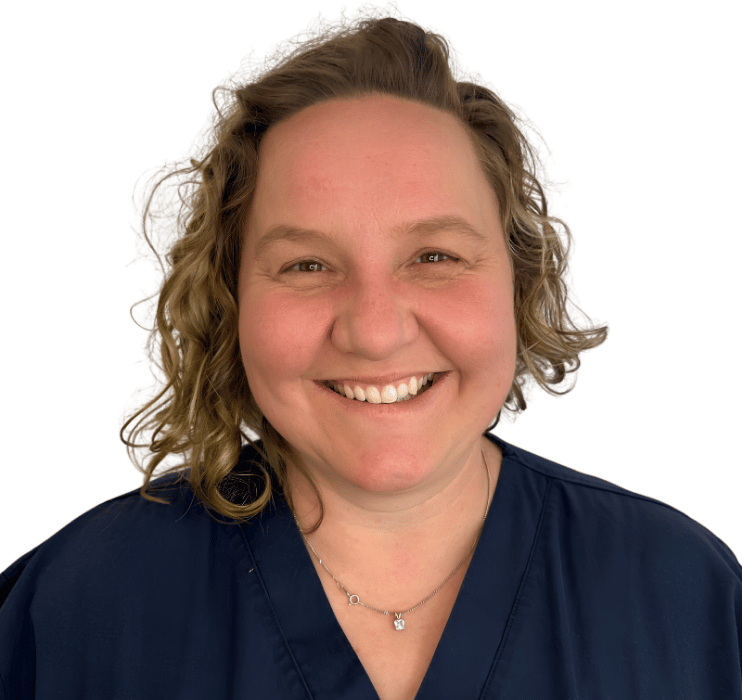
“I live rurally, work as a GP rurally… and I just love it.”
For Dr Beer, rural medicine is not an abstract interest. It is where she lives and works. She describes herself as a rural generalist, with a career that has taken her through rural GP work, emergency departments and now led to occupational medicine.
“I live rurally, work as a GP rurally,” she said. “When I’m not doing occupational physician work, I’m doing rural ED work… locuming around the country. I just love it.”
Rural emergency medicine often places doctors at the first point of contact for complex presentations: workplace injuries, unmanaged chronic disease, delayed access to care, and people arriving sicker than they might otherwise have been.
From rural EDs to occupational medicine
Dr Beer’s interest in occupational medicine grew naturally out of her clinical work. After working at a zinc works mine site, she found the field practical and engaging. She had already been doing a great deal of occupational medicine as part of general practice; formal training was a way to deepen and recognise that work.
“As a GP you do so much occupational medicine anyway,” she said. “It’s just adding that in so that I’ve actually got it formally recognised.”
She is currently around six months into a three-year occupational medicine fellowship. Long term, her aim is to combine rural emergency medicine and occupational medicine.
A career built on useful curiosity
We asked Dr Beer what the highlight of her career was so far. She hesitated at first, then landed on an answer that felt more revealing than a conventional career milestone.
“I love every day,” she said. “Because I do locuming and a lot of different things, I see different things all the time.”
Dr Beer spoke about the privilege of seeing different systems, communities and presentations, and the satisfaction of educating patients and staff around her. The theme was not prestige; it was usefulness.
What rural emergency medicine teaches you
Dr Beer explained that although she is a GP by qualification, her current work is largely in emergency departments. That means she does not have the same regular patient base as a community GP, but she does see recurring patterns across rural and remote communities.
“No one can get into a GP anymore,” she said. “So they’re all rocking up to EDs, probably sicker than what they need to be because their chronic diseases aren’t managed as well.”
She also sees workplace injury presentations through emergency departments, including initial WorkCover presentations. Her work has taken her across the country: Maitland, Port Augusta, Christmas Island, Tasmania, outback Queensland and outback Western Australia, with the Northern Territory still on her list.
Her work often places her close to the early, less well defined stages of a medical story with symptoms, work, access to care, recovery and function all intersecting in real time.
A life outside medicine: farming, animals, books and winter
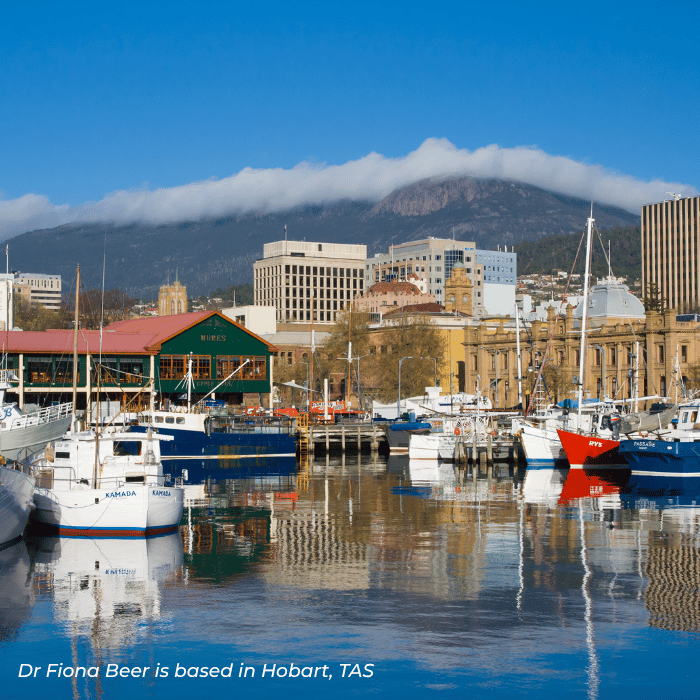
When Dr Beer is not doctoring, she is often farming. She lives on a hobby farm about 45 minutes outside Hobart, with dogs, chickens, sheep and bees. A cat, she says, will return eventually, once the fencing and cat flap situation improves.
The farm produces lamb, eggs and honey, although the vegetable garden is currently losing its battle with the wallabies. The future plan is a polytunnel, but only after exams (priorities first).
Dinner guests, Norwegian novels and the questions that do not fit a CV
We asked Dr Beer if she could have dinner with anyone, alive or dead who would it be and why. She thought this was a really odd question, which is fair. But after some thinking aloud, she mentioned Jostein Gaarder, the Norwegian philosophical writer best known for Sophie’s World. She lived in Norway for a year on youth exchange and still reads in Norwegian to keep up her language skills.
She imagined dinner at home rather than in a restaurant. Keeping this fictional dinner quiet, relaxed, and the hospitality of something cooked herself. Understated, and more interested in conversation than performance.
Why this matters for referrers
Medico-legal referrals require more than credentials. They require judgement, context, clarity and a doctor who can understand a person’s presentation without flattening it into a checklist.
Dr Fiona Beer’s background gives her a distinctive perspective: rural emergency medicine, occupational medicine training, psychology, health statistics, clinical trials and the lived reality of working across different communities and systems. For lawyers, insurers and case managers, that breadth is relevant because many medico-legal questions sit at the intersection of health, work, function and real-world constraint.
When Dr Beer may be a relevant referral
Dr Beer’s background may be particularly relevant in matters involving workplace injury, occupational health, rural or remote access to care, emergency department presentation, functional capacity, or medical histories that have developed across several systems rather than one treatment pathway.
If there is a thread running through Dr Beer’s work, it is comfort with the messier parts of real life: rural emergency departments, occupational health, complex pathways to care, ongoing study, a farm outside Hobart, and a vegetable garden still waiting for the wallabies to surrender.
For referrers, that is the useful thing to remember. Dr Beer is not just experienced. She is used to complexity before it has been tidied up.
Dr Beer’s availability can be checked through Red Health Online or by contacting our Client Experience team to discuss whether she is the right fit for your matter.
When I’m not working, I’m usually farming. I live on a hobby farm about 45 minutes outside Hobart with dogs, chickens, sheep and bees. We produce our own lamb, eggs and honey.
I also attempt to grow vegetables, although the wallabies are currently winning that battle. The plan is to put in a polytunnel, but that will have to wait until after my exams. Priorities first.
I think I’d choose Jostein Gaarder, the Norwegian philosophical writer best known for Sophie’s World. I lived in Norway for a year as a youth exchange student, and I still read in Norwegian to maintain my language skills, so I think we would have a fascinating conversation.
I’d invite him to dinner at home rather than go to a restaurant. I’d cook something myself and keep it quiet and relaxed.
Probably the most surprising thing about me is that I’ve hardly ever not been studying. I’ve studied psychology, health statistics and medicine, and now I’m training in occupational medicine. I’ve always been curious and enjoy learning, particularly when I can apply that knowledge in a practical way.
Both. I have two dogs at the moment, but I’m definitely team both. I’d love to have another cat eventually, but our current fencing and cat flap setup needs a little work before we can safely welcome one.
Winter!
Yes!